Christine Moore Vassallo –
From Al Andalus to the Americas – An Odyssey of Spanish Song
CD RELEASED ON JUNE 28, 2024
www.christinemooresoprano.com
AVAILABLE ON ALL STREAMING PLATFORMS
AND FOR HARD COPY PURCHASE
Listen on Streaming:
Christine Moore Vassallo – From Al Andalus to the Americas – An Odyssey of Spanish Song
Listen on Spotify:
Christine Moore Vassallo – From Al Andalus to the Americas – An Odyssey of Spanish Song
Physical CDs can be ordered here:
Meridian Records UK
CLICK TO WATCH THE NYC CD RELEASE CONCERT (6/28/24): https://www.youtube.com/watch?v=mmpU2h25kMI
“…the high level of expressiveness of these songs comes through especially strongly in Vassallo’s near-operatic presentations.”
– Infodad.com
To see the CD track list, click on photo #2.
Song translations:
https://fromalandalustotheamericas.com/wp-content/uploads/2024/05/song-translations-june-28.pdf
Program Notes:
https://fromalandalustotheamericas.com/wp-content/uploads/2024/05/program-notes-june-28.pdf
For inquiries, email: info@christinemooresoprano.com
RECORDING INFORMATION
Catalog No.: CDE84647
Christine Moore Vassallo, Soprano
Jorge Robaina Pons, piano
Pablo Giménez Hecht, guitar
Anthony Robb, flute
Rachel Beckles Willson, ‘Oud
Philip Arditti, darbuka
Recorded in St. Edward’s Church, Mottingham, London
Recorded by: Richard Hughes
Recording Producer: Susanne Stanzeleit
Cover Design: Onome Ekeh
Photo of Christine: Christian Steiner
Executive Producer: Richard Hughes
www.meridian-records.co.uk
℗ & © Meridian Records 2024
RADIO TRANSMISSIONS
BBC Radio 3, host Tom McKinney (England) – 30 June (“Las Morillas de Jaen”): https://drive.google.com/file/d/182fREypMGpKWKAYllWUbJ8s42PWByaeL/view?usp=sharing
BBC Radio Ulster Classical Connections, host John Toal (N. Ireland) – “Album of the Week”, 23 June (“Sevillanas del Siglo XVII”) – https://drive.google.com/file/d/1qFqhR6YRJVFlXN7ao2DPLskH9VZM6KEY/view?usp=sharing
Inverness Hospital Radio, host Rob Polson (Scotland) – 2 July (“Pasabase el rey moro”): https://www.mixcloud.com/invernesshr/world-live-and-early-may-2024/
KALX Radio UC Berkeley, FREEFORM with host Diane Young (USA)- 23 Aug (“Jaeneras que yo canto”): https://spinitron.com/KALX/pl/19416416/FREEFORM
Dunoon Community Radio – Fiona McNeill’s Garage Radio (Scotland), host Fiona McNeill – 3 September (“Lamma bada yatathanna”) – https://fromalandalustotheamericas.com/wp-content/uploads/2024/05/christine-lamma-bada-fionas-garage-radio-dunoon-community-radio.mp3
REVIEWS/NOTICES
Infodad.com (USA – May 30, 2024) https://transcentury.blogspot.com/2024/05/personal-journeys.html
LAOpus.com with Erica Miner (USA – June 24, 2024) https://www.laopus.com/2024/06/christine-moore-vassallo-takes.html
Operawire.com (USA – June 28, 2024): https://operawire.com/elina-garanca-john-osborn-christine-moore-vassallo-lead-new-cd-dvd-releases/
The Brazen Head with Stuart Millson (UK – June 25, 2024)
https://brazen-head.org/2024/06/25/an-hispanic-and-germanic-journey/
Classical Music Daily with Amber Lin & Jeffrey Neil (USA – July 1, 2024) https://www.classicalmusicdaily.com/2024/07/spanish.htm
Pizzicato with Rémy Franck (Luxembourg – July 3, 2024) https://www.pizzicato.lu/poetisches-liederprogramm/
MundoClasico.com (Spain – July 11, 2024): https://mundoclasico.com/articulo/41667/Christine-Moore-graba-From-Al-Andalus-to-the-Americas
Beckmesser (Spain – July 14, 2024): https://www.beckmesser.com/christine-moore-vassallo-presenta-nuevo-cd/
The Arts Desk – review by Graham Rickson (UK – August 9, 2024):
https://theartsdesk.com/classical-music/classical-cds-queens-crotales-and-secret-gardens
American Record Guide – review by Elliot Fisch (USA – Sept/Oct edition – August 15, 2024)
https://fromalandalustotheamericas.com/wp-content/uploads/2024/05/american-record-guide-sep-oct-2024-from-al-andalus-to-the-americas20240815_17314803.pdf
INTERVIEWS/PODCASTS
The Cross-Eyed Pianist – Meet the Artist Online (UK – July 3, 2024) (https://meettheartist.online/2024/07/03/christine-moore-vassallo-soprano/
Journey of An Aesthete Podcast with Mitch Hampton (USA – July 18, 2024): https://www.youtube.com/watch?v=EitW1bjY8JE





INTRODUCTION
The world has long been captivated by the golden age known as the Moorish period in Spain, then called al-Andalus. Umayyad rule of most of the Iberian Peninsula began in 711 AD, when Tariq ibn Zayid, an Amazigh (often called “Berber”) from Morocco, invaded southern Iberia, and ended with the fall of Granada in 1492 to Queen Isabella and King Ferdinand. This 800-year time span of Muslim governance, for the most part tolerant of its varied ethnicities – Amazigh, Arabs, Visigoths, Jews, and Christians – and religious traditions — namely, Jewish, Christian — facilitated an unprecedented intellectual and artistic co-mingling and flourishing that transformed all aspects of Spanish life. Al-Andalus evokes a civilization of sublime beauty, one in which artists, poets and philosophers thrived, and diverse people groups lived together in a harmony that approached equality. Although Moorish rule in al-Andalus ended in the 15th century politically, this period influenced the formation of the Spanish nation and left a lasting effect on Spanish (and subsequently European) culture, most notably in the southern region of Andalusia. Here the unique Spanish musical style of flamenco was also born.
I first became interested in Spanish music owing to my Middle Eastern background and musical proclivities. My mother, of Levantine Arab ancestry, was born and raised in Egypt, and though I grew up in California, from a young age I was interested in the music of my mother’s culture. The Arabic sounds I heard in Spanish music felt intrinsically connected to the music of my ancestors and, as a classical singer, I discovered that Spanish art song was the closest fit to my own Western classical singing genre. Pure Arabic music is sung in the Oriental style of the Middle East (and thereby referred to as “Oriental music” in the region), which requires a lighter sound and the ability to improvise, unlike the heavy full lyric sound of operatic singing. Upon delving into this repertoire through study in both Granada and Madrid, I was delighted to discover the wide variety of styles coming from not only all regions of Spain, but also from Latin America. Instead of finding a musicological path to link this music to the Andalusian period, I decided that a loose connection of my own, based on text, style, history and, of course, music, would help me create the “musical odyssey” that is this recording. One of the repertoire decisions I made was the addition of an old Arab song, an Andalusian poem called a “muwashshah” connected to al-Andalus through its poetry, yet set to an Ottoman era melody. I have also included a set of five folk songs from Argentina that have little musical or textual relationship to Spain, but lend a sense of finality to this particular odyssey. Another cycle included here is one by a living Spanish composer, who set to music texts of famous Andalusian poets from Iberia and Iraq, both in Spanish and in Andalusian Arabic. Not to be forgotten from that era of co-existence is an arrangement of famous Sephardic songs sung in Ladino (Judeo-Spanish) — a language that continues to be spoken by some Sephardic Jews in Turkey and elsewhere. The remaining works come from a range of eras and include an early 16th century song for voice and vihuela describing a battle preceding the fall of Granada, a flamenco-style piece for voice and guitar, 16th and 17th century Spanish songs that the famous Granadino poet Federico Garcia Lorca arranged for piano but are sung here with guitar, and two of the most famous song cycles in the Spanish repertoire. However varied in style, period, location or language, each work is imbued with what the Spanish call “duende.” Imperfectly described, “duende” is a spirit that invokes emotion and authenticity, yet it cannot be adequately translated; it can only be felt. I invite listeners to join me on this 800-year musical odyssey through time and place. May it be as enjoyable to listen to as it was to make. – Christine Moore Vassallo
MUSICIAN BIOS
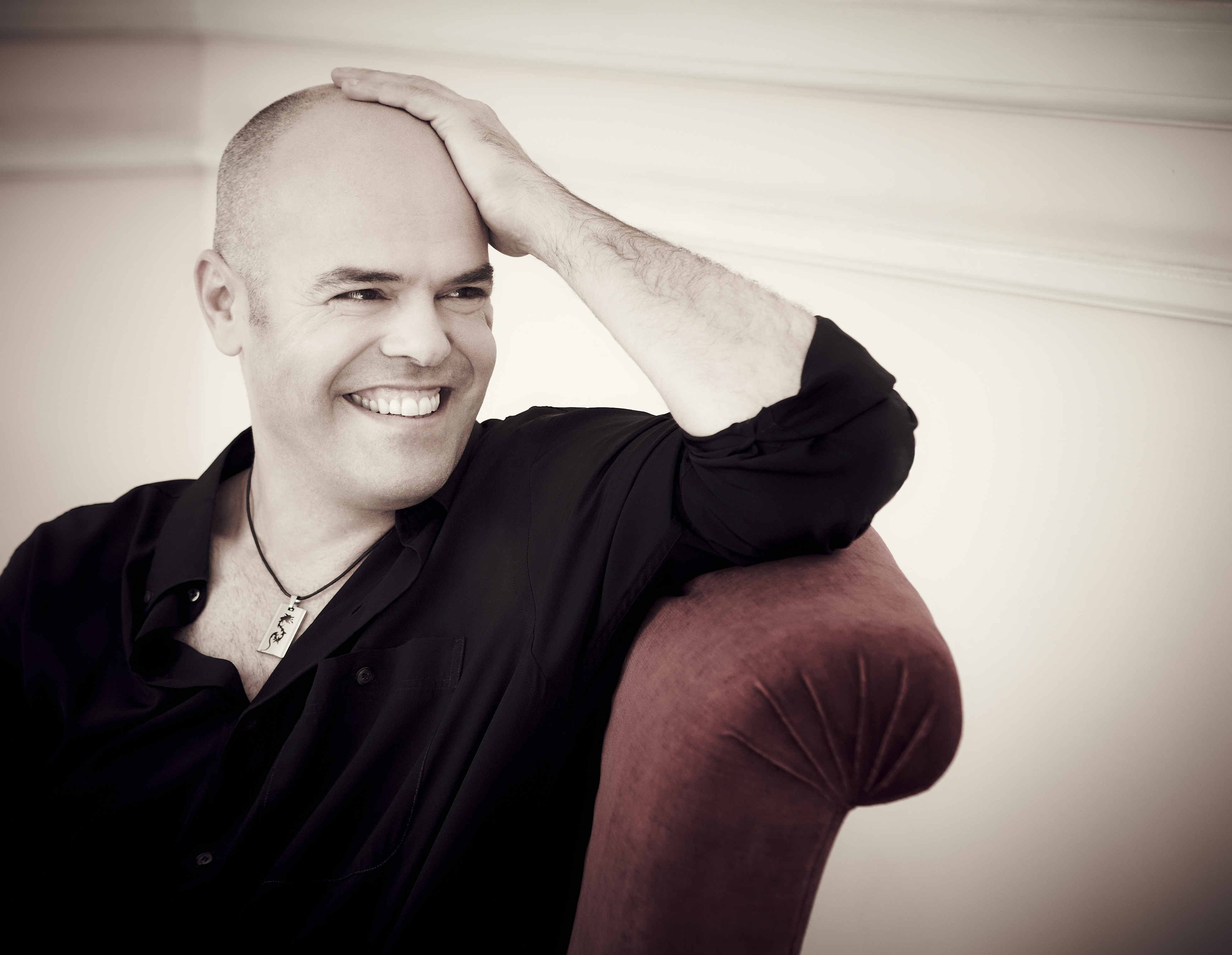
Praised by the Leipziger Volkszeitung for her lush sound and powerful expression, American soprano Christine Moore Vassallo is a versatile performer with equal command in opera, recital, and contemporary music. The Sacramento, California native counts among her many opera roles Mimi in La Bohème, the title role Madama Butterfly, Alice Ford in Falstaff, Micaela in Carmen, the title role in Suor Angelica, Santuzza in Cavalleria Rusticana, Donna Anna in Don Giovanni, Countess in Le Nozze di Figaro, Judith in Bluebeard’s Castle, Leonora in Il Trovatore (described as “velvety and luscious” by SongWordSight Magazine), the title roles in Aida and Ariadne auf Naxos with such companies as the Leipzig Opera, Central City Opera, Santa Fe Opera, Chautauqua Institute, Utopia Opera, Create Opera, the Aldeburgh Summer Festival, Sacramento Opera, the Amato Opera and Lyric Artists of New York. She was a regional finalist in the Metropolitan Opera National Council Auditions and First Prize winner of the Sacramento Opera Competition. Oratorio performances include Barber’s Knoxville-Summer of 1915, Handel’s Messiah, Beethoven’s 9th Symphony, Rossini’s Stabat Mater, Mendelssohn’s Elijah, and the Verdi Requiem with the New York Choral Society and most recently with Orchestra Amadeus. In 2013 she made her Italy debut at the Narnia Music Festival in a concert celebrating the 200th birthday of Verdi. That same year she curated and performed in the first ever concert of Arab composers, “Nearer to East: Chamber Music from the Arab World” at the Bruno Walter Auditorium at New York’s Lincoln Center, which concert was lauded by the Library as one of the outstanding of the year. She speaks five languages and sings in ten, and has given numerous solo recitals featuring works of all genres of repertoire and languages, including in Granada and Madrid with Festival de Canción Española, Trinity Concert Series in New York, the Library at Lincoln Center, Merkin Concert Hall, the Edinburgh Fringe Festival, and the Old Stone House. She made her UK debut in 2005 at the Paxton Chamber Music Festival in Scotland with Schönberg’s Pierrot Lunaire (praised by the Glasgow Herald) and has performed many new works by living composers, including the premiere at Merkin Hall, NYC of Richard Thompson’s song cycle The Shadow of Dawn as well as the NYC premiere of his opera The Mask in the Mirror, Andrew Rudin’s “Masha’s Arias”, and works by Michael Rose, Kareem Roustom, Halim El-Dabh, Richard Cameron-Wolfe, Steve Gerber and Zaid Jabri with the Brooklyn New Music Collective. In 2008 she performed the world premiere of Mohammed Fairouz’s Tahwidah written for her and clarinetist Kinan Azmeh. Radio appearances include WNYE and WBAI (New York City) and KRZA (New Mexico). In 2006 she released her first recording, Christine Moore – Arias with the Bulgarian National Radio Symphony Orchestra (Musical Concepts). In 2016 she founded Lyric Artists of New York, a singers’ collective that produces operas and concerts in the New York area. In addition to performing, she leads an active teaching schedule with a private studio and has been a Teaching Artist at the Lunigiana International Music Festival and American Voices’ YES Academy Lebanon, with her students having won multiple awards and competitions. This year 2024 is the long-awaited release of her CD, From Al Andalus to the Americas – An Odyssey of Spanish Song, and in 2025 she will release a recording of a new compilation of songs by composer Patricio Molina set to Arab women poets of the Al-Andalus, Spain. christinemooresoprano.com
Born in the Canary Islands, Spanish pianist Jorge Robaina completed his musical studies in Vienna with highest honors. After winning several national and international competitions he has performed in the most prestigious musical festivals in Spain and in important concert halls around the world such as the Festspielhaus in Salzburg, the Musikverein in Vienna, the Philarmonie in Cologne and Carnegie Hall in New York. As a soloist, he has collaborated with the Asturias Symphony Orchestra, the Gran Canaria Philharmonic Orquestra, the Tenerife Symphony Orchestra, the Ciudad de Oviedo Symphony Orchestra, the Córdoba Orchestra, the Spanish National Orchestra, the RTVE Orchestra, the Polish RTV Orchestra, the Murcia Orchestra, the Hungarian Chamber Symphony Orchestra and the Vienna Mozart Orchestra amongst others. He has worked under the baton of conductors such as Charles Dutoit, Victor P. Pérez, A. Witt, Odón Alonso, M.H. Silva, A. Ramírez Iborra, Max Valdés, Ros Marbá and A. Leaper. He won the Ritmo Magazine award for his recordings Guridi y el Padre Donostia and El Piano Olvidado on the IBS Classical label. He was the first pianist to record the Concerto for Piano and Orchestra by J.J. Falcón Sanabria with the Hungarian Chamber Symphony Orchestra, Nostálgico by C. Bernaola, and the Concerto for Two Pianos and Grand Orchestra by A. Martin Pompey together with the RTVE Orchestra. Throughout his career he has collaborated with many singers including Teresa Berganza, Marta Infante, María José Montiel, Marina Pardo, Raquel Lojendio and Anna Tonna, among others. He is currently Professor of Vocal Repertoire at the Escuela Superior de Canto in Madrid and regularly gives masterclasses in the same specialty in Spain and the United States. escm.es/jorge-robaina
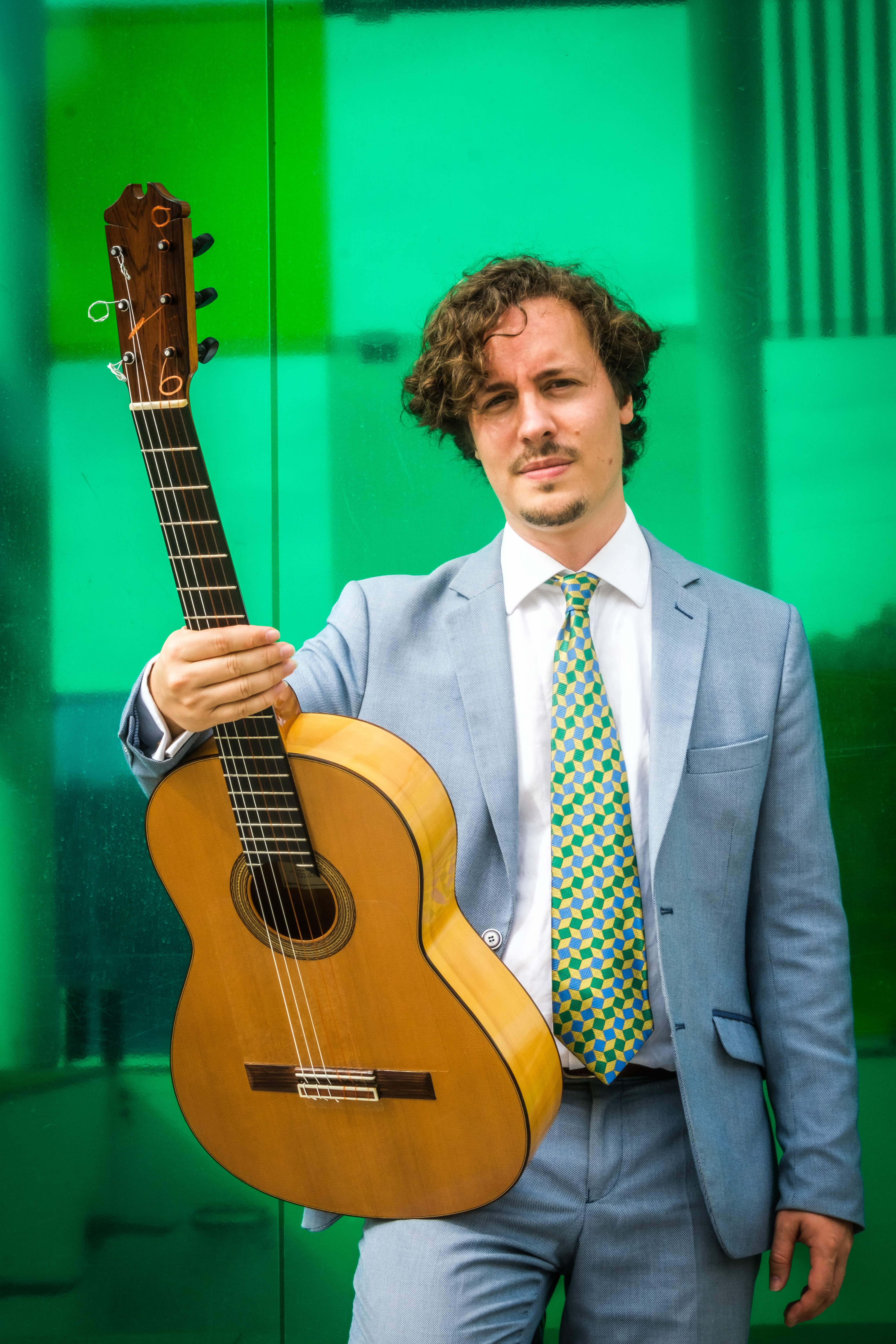
Pablo Giménez began playing guitar at the age of five in his native Granada, Spain, focusing on both classical and flamenco traditions with his father, Juan Miguel Giménez. He commenced his formal musical education at age eight and earned a degree in classical guitar at Granada’s Conservatorio Superior “Victoria Eugenia,” followed by a second degree in flamenco studies at Córdoba’s prestigious Conservatorio Superior “Rafael Orozco.” Over the past several years, his engagements have included the Boston Guitar Festival, the International Festival du Carthage in Tunisia, the International Festival “Andrés Segovia” in Madrid, the Teatro Helena Sá e Costa in Porto, Portugal and the Festival Veranos de la Villa, Madrid. Among his most important concerts was a solo recital, “Inspired by Flamenco” at the Library at Lincoln Center in New York with a programme highlighting the kinship between Spanish classical guitar and flamenco, which was also performed in China, Taiwan, Poland, Germany, Spain, and other U.S. cities. He was featured in the documentary film “Instrumental Places: Granada”, produced by luthier Steve Connor and filmed at such iconic sites as the Alhambra and Bañuelo, and was a featured soloist with the Guadix and Ave María Symphonic Bands, performing among other works the 2nd movement of Joaquín Rodrigo’s Concierto de Aranjuez. For many years, Mr. Giménez was a nightly performer alongside talented dancers, singers and guitarists in the traditional “tablao flamenco” shows of Granada’s legendary caves of Sacromonte. His current work as performer, artistic director, and collaborator includes “Duo Giménez” with his father, with whom he recorded De Profundis a lo Jondo, a project combining sacred music and cante jondo (“deep song”), tours in Spain and the U.S. with his flamenco trio Corazón de Granada, including their debut at the Kennedy Center in Washington D.C., and the flamenco duo “Real de la Alhambra” with Sara Jiménez, current soloist of the Andalusian Flamenco Ballet. @pablogimenezguitar
Described as an “outstanding individual player” by The Times of London, British musician Anthony Robb is one of the most versatile flautists of his generation. His career has ranged from playing principal flute in all of London’s’ Symphony and Chamber orchestras, to concerto performances with The Halle, BBC Concert Orchestra, Sinfonia 21, London Virtuosi, and the Oxford Philharmonic. In the commercial world he has recorded and performed with Madonna, Sir Paul McCartney, Katie Melhua, Dave Brubeck, John Dankworth, Oasis, Julie Andrews and Jose Carreras. He can also be heard on the soundtracks to many TV shows and films. anthonyrobbflute.com
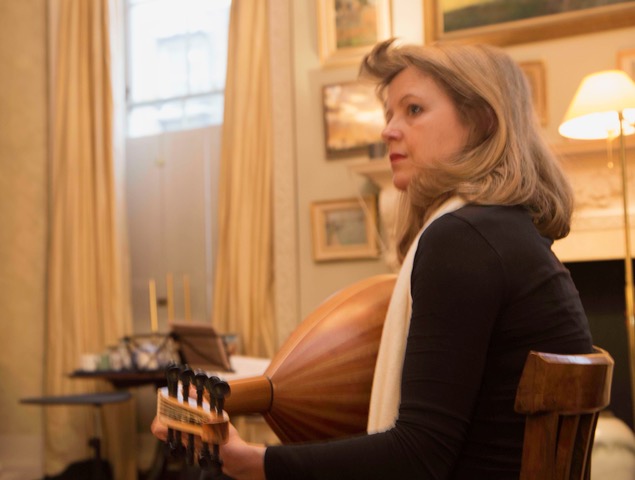
After the discovery of the oud while working in Palestine, British musician, writer, and composer Rachel Beckles Willson dedicated much of her work to this instrument. She was a regular student at Labyrinth Musical Seminars in Crete, 2010-2015, and has played regularly with London-based community ensembles Nihavent and Suzidil, as well as distinguished musicians in Arab, Persian and Ottoman traditions. Two recent and ongoing projects are Today is Good!, a song-writing project with asylum-seekers, and Beyond Mode, a quartet developing modal music of the Mediterranean. In an earlier life she was a concert pianist, following training at the Royal Academy of Music, London and the Liszt Academy, Budapest. She also studied composition and saxophone, and performed widely in Europe as soloist and in ensembles, with a specialization in new music. Rachel was Professorial Research Associate at SOAS, University of London, where she directed a Middle East Ensemble and taught oud. As a scholar, she has published numerous articles and books, including Orientalism and Musical Mission: Palestine and the West (2013), and numerous articles on her research site www.oudmigrations.com. She is currently Research Professor at Codarts, Rotterdam, and the Academy of Creative and Performing Arts at Leiden University in the Netherlands.
Philip Arditti is an actor and musician based in London. He grew up Istanbul’s Sephardi Jewish community before moving to London to train as an actor. He came to percussion in his 20ies and studied in Istanbul specialising on the Darbuka, Riqq and Frame drums. philiparditti.com
*****
 From Al Andalus to the Americas - An Odyssey of Spanish Song